A Settings redesign that moved feature activation during trial
AI features buried in the wrong place don't convert. I diagnosed a mental model mismatch in Arlo's settings architecture and redesigned the IA for 5.7M users, shipped as a live experiment.
ROLE
Interaction Designer
TIMELINE
6 months
2025
TEAM
5 people
SCOPE
Settings IA, Copy,
Micro Interactions
DOMAIN
Smart Home, IoT
TOOLS
Figma, Claude, Figma Make,
PROJECT OVERVIEW
If Users Can't Find The Feature—It Doesn't Exist
The Problem: The Settings were organized around Arlo's business model and backend structure—not how users think.
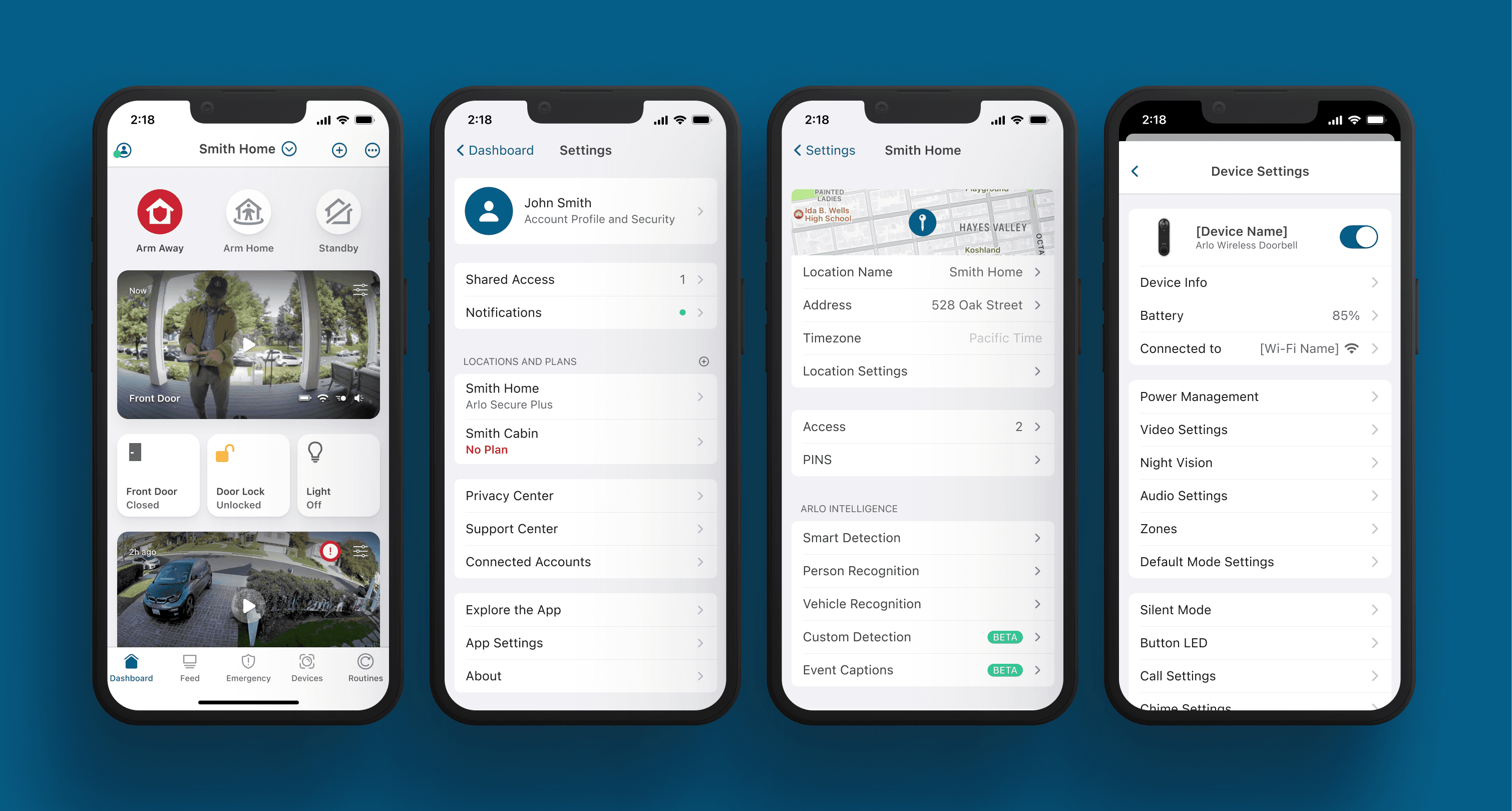
Arlo's most valuable AI features — Smart Detection, Person & Vehicle Recognition — were buried inside a global section called "Locations and Plans." Users think at the device level: my front door camera. They had no reason to go to a global settings area to find capabilities that logically belonged to their device. The label gave no information scent.
The value proposition was invisible.
UX Challenge
Redesigning an IA that millions of users already navigated — without breaking what worked.
The Solution: Reorganize the app around how users think, and move AI features to where users actually look—the device.
I mapped the mental model mismatch, identified three compounding failure points in the IA, and proposed a redesign that moved AI features to where users actually looked. We phased the work — shipping the AI feature enrty point first as a live experiment to 5.7M users, with the broader IA restructure following in the roadmap.
The result: a 2x increase in premium feature activation.
Constraints
No backend changes. No new features. The solution had to work within the existing system architecture.
DESIGN
Explore the Redesign
The prototype below walks through the full settings restructure — from the original IA to the redesigned device-level entry points. It includes the mental model mapping, the three failure points I identified, and the phased rollout strategy.